
For the last ten years, the formula for a yoga retreat in India has been identical. It follows a predictable script: You fly into Delhi, take a taxi to Rishikesh, check into a nice hotel, practice asana in a square hall for four hours a day, eat vegetarian food, and go home.
There is nothing wrong with this model. It works. It is safe. It is comfortable.
But in 2026, the market is shifting. The "standard" retreat has become a commodity. There are now thousands of teachers offering the exact same 7-day package in Tapovan or Ram Jhula. The market is saturated, and students are becoming immune to the usual marketing hooks.
Travelers today—especially the high-net-worth individuals you want to attract—are no longer just looking for a "holiday with yoga." They are seeking deep, visceral transformation. They are suffering from "Digital Burnout" and "Urban Fatigue." They don't just want to look at the Himalayas from a hotel window; they want to be in them.
This shift has given birth to a new, high-value category in the wellness industry: Adventure Wellness.
For retreat leaders, this is the biggest opportunity of the decade. By moving your retreat out of the "four walls" of a studio and into the snow-capped peaks of Auli, the emerald waters of Tehri, or the dense oak forests of Pauri, you aren't just selling a yoga class. You are selling an expedition.
Here is why 2026 will be the year of the "Hybrid Retreat," and exactly how you can be the first to offer it.
Part 1: The Psychology of the 2026 Seeker
Why is this trend happening now? To sell this retreat, you need to understand what is happening in your student’s brain.
1. The Craving for "Awe"
Psychologists have identified "Awe" as a critical component of mental health. It is the feeling of being in the presence of something vast that transcends your understanding of the world.
A yoga hall is peaceful, but it rarely produces awe. Standing at 3,000 meters in Auli, looking at Nanda Devi (the second-highest mountain in India) while the wind howls—that produces awe. It instantly silences the ego and puts personal problems into perspective. Students are willing to pay a premium for this feeling.
2. The Need for "Dopamine Detox"
Your students live their lives glued to screens. Even on standard retreats, the WiFi in the hotel room is a temptation.
Adventure Wellness forces a disconnect. When you are trekking through a Rhododendron forest in Pauri, you aren't checking Instagram. The terrain demands your presence. This leads to a faster, deeper state of mindfulness than three days of seated meditation can achieve.
3. The Shift from "Passive" to "Active" Healing
The old model of wellness was passive: “I will lie down and get a massage.”
The new model is active: “I will climb this hill to reclaim my power.”
There is a growing body of research on Kinesthetic Grounding—the idea that moving the body through challenging natural environments processes trauma and stress more effectively than talk therapy.
Part 2: The Three New Frontiers (Auli, Pauri, Tehri)
Rishikesh is the "Gateway." It is the start of the journey. But to offer something exclusive, you need to go higher. Here are the three destinations that will define the luxury retreat market in 2026.
1. The "Snow" Experience: High-Altitude Retreats in Auli
The Vibe: Ethereal, Silence, Contrast.
Best Season: January – March (Snow), April – June (Alpine Meadows).
This is the final frontier. While your competitors are heading to the humid beaches of Goa or Bali, the most exclusive retreats of 2026 will be happening in the snow.
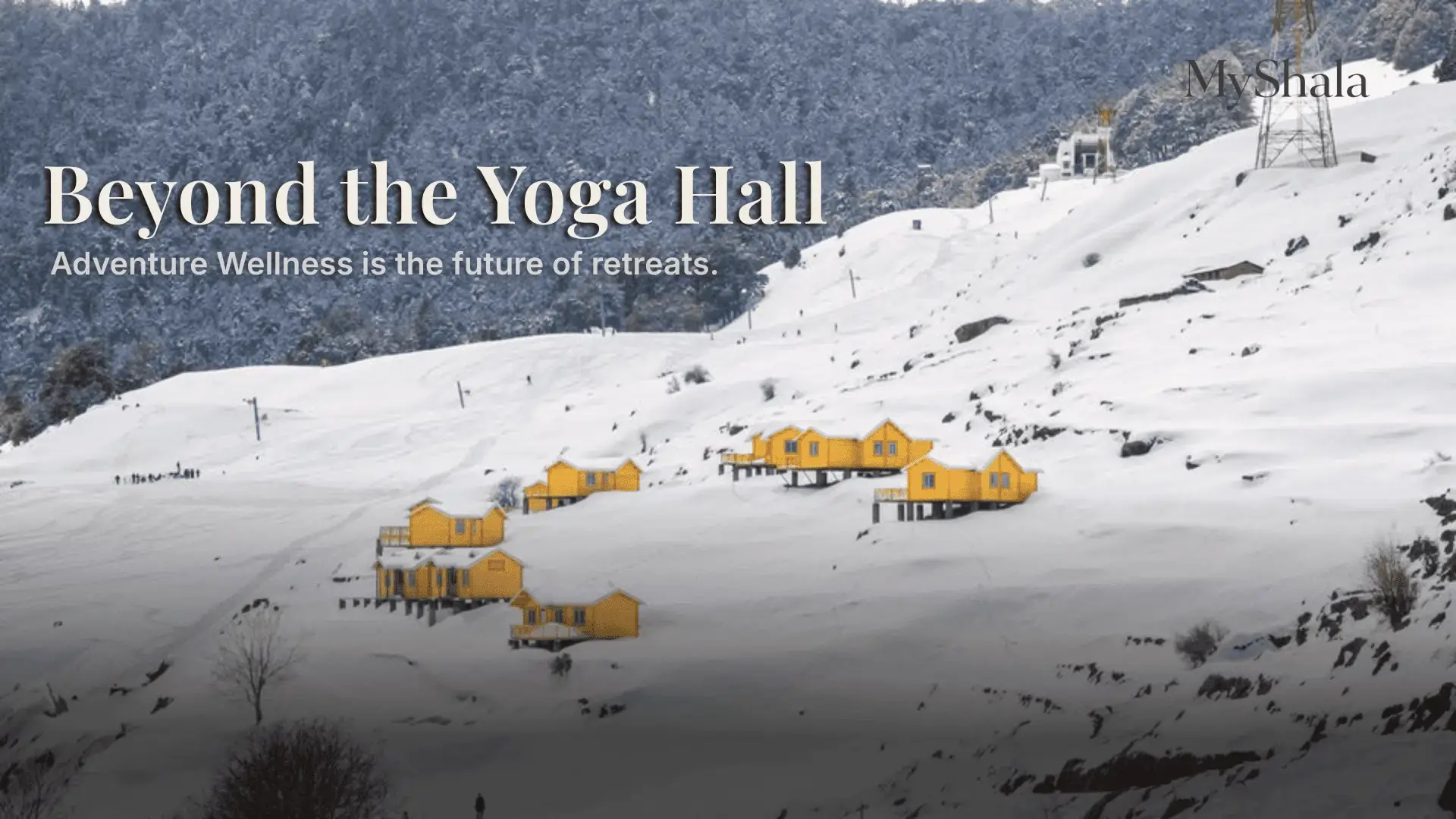
Auli, often called the "Switzerland of India," sits at 2,800 meters. The silence here is absolute. Snow absorbs sound, creating a natural sensory deprivation tank that is perfect for meditation.
The "Snow Yoga" Concept:
We are not talking about doing headstands in a blizzard. We are talking about Thermal Contrast Therapy.
- Morning: Breathwork (Pranayama) in the crisp, cold mountain air. The cold acts as a shock to the nervous system, boosting immunity and alertness (similar to the Wim Hof Method).
- Afternoon: Snow hiking or cable-car meditation with panoramic views of the Himalayas.
- Evening: Deep, restorative Yoga Nidra in a heated, wooden-floored lodge with a fireplace crackling in the corner.
Why it Sells:
It positions your retreat as a "Winter Hibernation" or a "Great Reset." It appeals to students who feel burnt out and want to retreat into a cozy, white cocoon.
2. The "Earth" Experience: Forest Trekking in Pauri
The Vibe: Grounding, Earthy, Ancient.
Best Season: October – April.
Sitting in stillness is powerful. But walking in silence through a Himalayan Cedar (Deodar) forest? That changes your brain chemistry. Pauri offers a view of the Himalayas that is arguably better than Rishikesh, but without the crowds.
The "Yatra" (Pilgrimage) Concept:
In the yogic tradition, the Yatra was essential. The act of walking was the prayer. Instead of a fixed schedule in a hall, the schedule here flows with the sun:
- Sunrise: Yoga on an open terrace facing the Chowkhamba peaks.
- Mid-Day: A gentle, guided 3-hour trek through Oak and Pine forests. This is "Shinrin-yoku" (Forest Bathing). The air quality here is pristine.
- Sunset: Tratak (Candle Gazing) meditation in a quiet mountain cottage.
Why it Sells:
It solves the "Restless Mind" problem. Many Western students struggle to sit still for 30 minutes. But they can walk for 3 hours. The rhythm of the walk becomes the meditation.
3. The "Water" Experience: Lake & Wilderness in Tehri
The Vibe: Flow, Depth, Emotional Release.
Best Season: September – November, March – May.
If Auli is about energy, Tehri is about depth. The massive Tehri Lake, an emerald expanse of water surrounded by mountains, offers a kind of seclusion that is impossible to find in Tapovan.
The "Floating" Concept:
This destination is perfect for retreats focused on Emotional Healing or the Water Element.
- The Setting: Luxury "Glamping" (Glamorous Camping) cottages right on the water’s edge or floating huts.
- The Practice: Sunrise yoga on floating decks. Kayaking as a mindfulness practice. Sound healing sessions near the water.
Why it Sells:
It combines the luxury of a resort with the isolation of a monastery. It captures the "Blue Health" trend—the psychological benefit of being near large bodies of water.
Part 3: The Economics (Why Adventure Pays Better)
Let’s put on our CEO hats. Why should you go through the effort of organizing a trip to the mountains instead of just staying in a Rishikesh hotel?
The answer is Profit Margin.
When you sell a standard "Rishikesh Yoga Retreat," you are competing in a Commoditized Market.
- Teacher A charges $1,500.
- Teacher B charges $1,400.
- Teacher C charges $1,200.
Students will compare you based on price because the product looks the same (Hotel + Yoga Hall).
Adventure Wellness is a De-Commoditized Market.
There is no price ceiling on an "Expedition."
The Math:
- Standard Retreat Ticket: $1,600.
- Adventure Hybrid Ticket: $2,400 - $2,800.
Why will they pay $1,000 more?
- High-Value Logistics: Students know that booking a private jeep, a certified trekking guide, and a luxury mountain lodge is expensive and difficult to do alone. They are paying you for the access.
- Exclusivity: You are taking them to places that aren't on the "Banana Pancake Trail." They can't just backpack to a luxury lodge in Auli easily.
- The "Story" Factor: People pay for stories. "I went to a hotel in India" is a boring story. "I did yoga in the snow in the Himalayas" is a story they will tell for ten years.
By increasing your ticket price by 30-40%, you significantly increase your net profit, even after paying for the transport logistics. Furthermore, you attract a higher caliber of student—one who is adventurous, resilient, and financially stable.
Part 4: The Execution (The "Hybrid" Itinerary)
You might be thinking: “I’m a yoga teacher, not a mountaineer. I don’t know how to organize jeeps, check road conditions, or find safe food in the middle of nowhere.”
This is the exact gap MyShala fills.
We recommend the "Hybrid Model". Do not overwhelm your students with 7 days of rugged travel. Give them the best of both worlds.
The Perfect 8-Day Hybrid Itinerary:
- Days 1–3: The Landing (Rishikesh)
Stay in a verified boutique hotel in Tapovan.
Focus: Grounding, recovering from jet lag, visiting the Beatles Ashram, experiencing the Ganga Aarti.
Comfort Level: High. - Day 4: The Ascent (The Journey)
Private luxury Traveler vans or SUVs pick up the group.
The drive itself is scenic, passing the "Devprayag" confluence where the Ganges begins.
Arrive at Pauri or Tehri by sunset. - Days 5–7: The Immersion (The Himalayas)
Stay in a mountain lodge or glamping site.
Focus: Nature immersion, silence, trekking, and deep inner work.
Experience Level: Deep/Transformational. - Day 8: The Return
Drive back to Dehradun Airport (DED) for flights home.
Part 5: How MyShala Removes the Risk
Hosting an adventure retreat in India has traditionally been risky. What if the jeep breaks down? What if the mountain hotel has no heat? What if the food isn't hygienic?
MyShala has spent the last two years building the logistics infrastructure to solve this.
- Verified Transport Fleet: We don't use random taxis. We have a network of reliable, hill-experienced drivers with well-maintained SUVs and Tempo Travelers.
- The "Safety Audit": We have personally visited the lodges in Auli, Pauri, and Tehri. We have checked the water heaters, the blankets, the kitchen hygiene, and the WiFi strength.
- Local Guides: We provide certified local guides for the treks who carry first-aid kits and know the terrain intimately.
You remain the Teacher. You hold the space. You guide the soul.
We become the Sherpa. We carry the load. We guide the journey.
Conclusion: Be the Pioneer
The wellness industry is crowded. In 2026, the teachers who win will not be the ones with the best playlists; they will be the ones with the best environments.
Don't just give your students a holiday. Give them a journey. Take them to the snow. Walk them through the clouds. Show them the side of the Himalayas that the tourists never see. This is your invitation to step out of the yoga hall and into the wild.
Ready to design your Himalayan Expedition?
MyShala is ready to build your itinerary. From the 4x4s to the mountain lodges, we handle the logistics so you can focus on the transformation.
Contact Us to Plan Your 2026 Adventure Retreat