
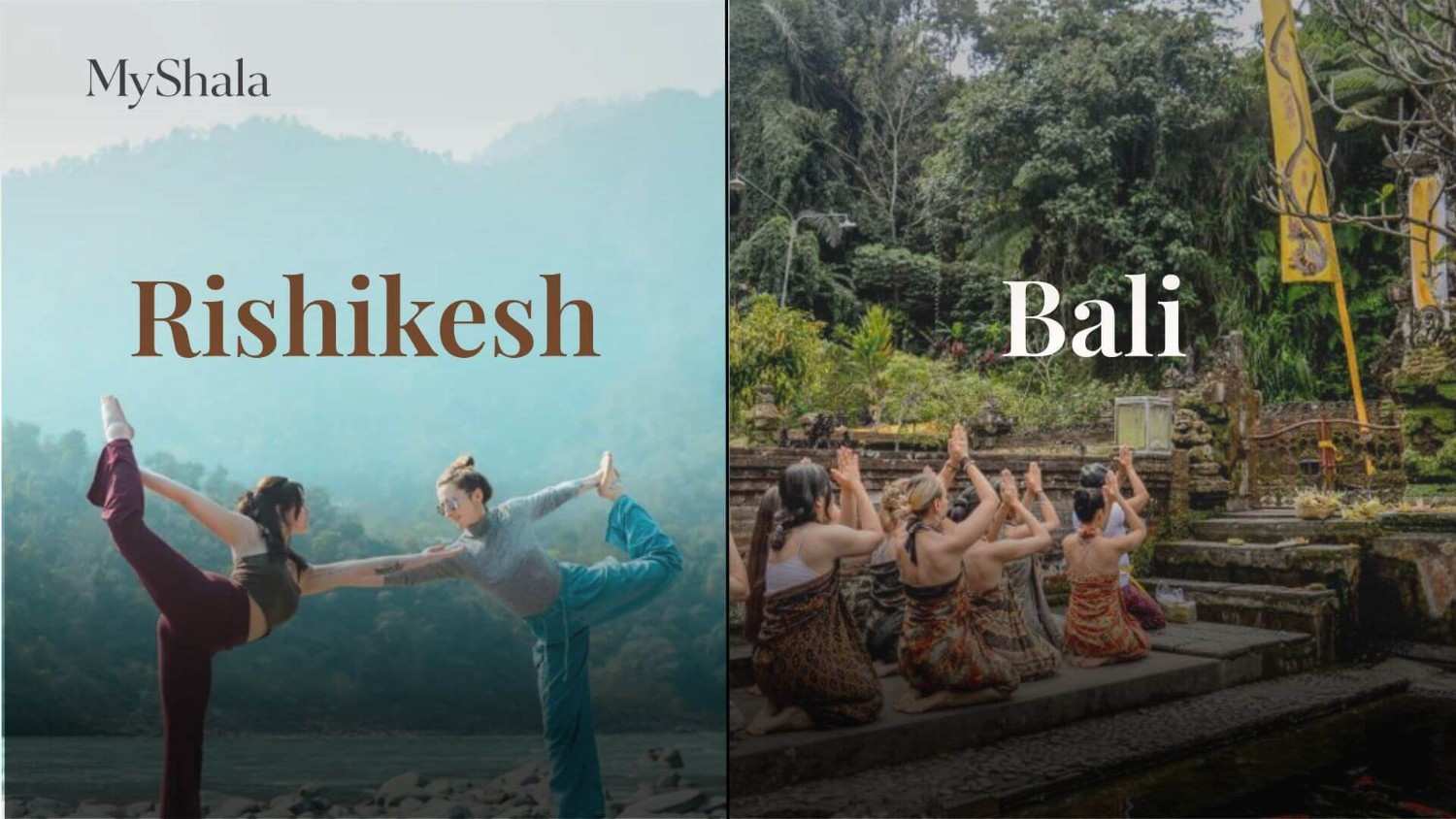
For the last decade, Bali has been the undisputed king of the yoga retreat world. If you were a Western yoga teacher planning your debut retreat, you booked a villa in Ubud, ordered a floating breakfast, and watched the sign-ups roll in.
But in 2026, the tide is turning.
The "Bali Bubble" has driven prices to Western levels, while the market has become incredibly saturated. For yoga teachers looking to run a sustainable business—not just a paid vacation—the numbers in Bali are becoming harder to justify.
Enter Rishikesh. The Yoga Capital of the World is not just the spiritual source of the practice; it is currently the most strategic financial move a retreat leader can make. Here is why savvy teachers are shifting their 2026 cohorts from the rice fields of Ubud to the banks of the Ganges.
1. The "Bali Premium" vs. The "Rishikesh Advantage"
Let’s talk business. To make a profit on a retreat, you need to maximize the margin between your Cost Per Student and the Market Price they are willing to pay.
Bali’s popularity has caused venue costs to skyrocket. A luxury shala in Ubud now charges prices comparable to Spain or Costa Rica.
| Expense Category | Bali (Ubud) | India (Rishikesh) |
|---|---|---|
| Luxury Accommodation | $900 - $1,200 | $400 - $600 |
| Food (3 Meals/Day) | $350 | Included |
| Activities | $200 | $80 |
| Total Base Cost | $1,500+ | $550 |
The Profit Result
If you sell your retreat ticket for $2,200 (a standard global rate):
- In Bali: You make ~$700 profit per student.
- In Rishikesh: You make $1,650 profit per student.
With a group of 15 students, that is the difference between making $10,500 and $24,750. Hosting in Rishikesh literally doubles your take-home income for the same amount of work.
2. Saturation vs. Authenticity
In 2026, students are craving depth. The "Instagram Yoga" era is fading. Students are tired of curated acro-yoga photos by the pool; they want transformation. They want lineage.
Bali is fantastic for a holiday, but it is often criticized for "Spiritual Materialism." Every second shop is a crystal healer or a breathwork coach. It is crowded.
Rishikesh offers what money cannot buy: Lineage. When you bring students to Rishikesh, you aren't just renting a room. You are practicing on the banks of the Holy Ganga. You are meditating in the caves where sages have sat for thousands of years. You are visiting the Beatles Ashram.
3. The "Luxury" Gap Has Closed
Ten years ago, the argument against India was comfort. Teachers worried about dirty rooms, bad toilets, and no AC.
That has changed dramatically. Tapovan and the surrounding hills now host boutique properties that rival any 4-star resort in Southeast Asia. We are talking about infinity pools overlooking the Himalayas, crisp white linens, high-speed fiber internet, and professional chefs preparing organic, vegan, gluten-free Ayurvedic meals.
You can now offer the "Soft Landing": Deep Indian spirituality during the day, and absolute Western comfort at night.
4. The Logistics Barrier (And How to Fix It)
So, if Rishikesh is more profitable and more authentic, why doesn't everyone go there?
Because Bali is easy. India is intimidating.
In Bali, you can land and get a Grab taxi instantly. In India, teachers fear the "chaos"—the taxi scams, the communication gaps, and the cultural friction.
💡 The Solution:
This is exactly why MyShala exists. We verify the venues, handle the vendor payments, and manage private transport so you get the "Bali ease" with the "India profit."
Conclusion: The Smart Move
As a yoga teacher, you are a CEO. You have to make decisions that ensure the longevity of your career. Bali will always be beautiful. But in 2026, Rishikesh is the smart play.
It offers your students a deeper connection to Yoga, and it offers you the financial freedom to keep doing what you love. Don't follow the crowd to Ubud. Come to the Source.
Ready to see the real numbers? Check out our verified Venues Page or Contact Us to get a custom profit estimate for your 2026 retreat.